
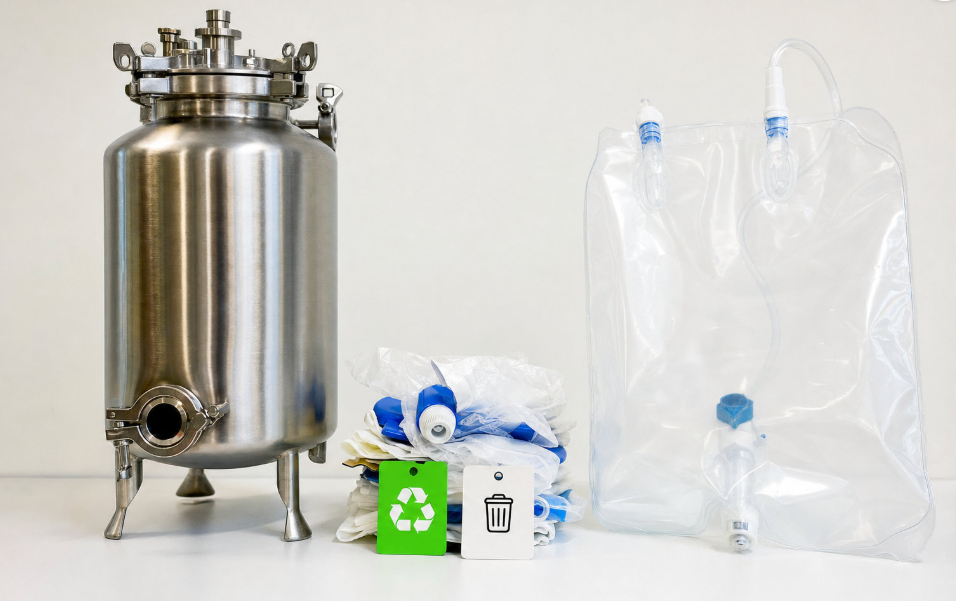
Sustainability within biomanufacturing is increasingly important, encouraging engineers and scientists to make environmentally responsible decisions. The comparison between disposable and reusable systems centers on issues of resource usage, waste generation, and regulatory compliance. Evaluating the impacts of these approaches supports more informed decisions for research labs and industrial production facilities.
Today’s bioprocess containers play a key role in discussions about reducing waste and conserving resources in pharmaceutical and biotechnology manufacturing environments. Interest in laboratory and manufacturing sustainability is growing, prompting teams to assess each step of workflow for its environmental impact. Selecting between disposable and reusable solutions requires consideration of factors such as energy use, water consumption, and waste management. Context-specific elements add complexity to these choices, highlighting the need for clear decision frameworks and life cycle analysis to guide sustainable laboratory practices.
Shifting priorities in laboratory sustainability
Laboratories and manufacturing facilities are under increasing pressure to minimize their environmental footprint. Growing awareness of resource limitations and climate-related concerns leads scientists and facility managers to carefully examine the materials and methods they use in their processes.
The decision between disposable and reusable systems has become more complex than a matter of convenience. With a greater emphasis on environmental engineering, utility requirements, waste generation, and process suitability must be evaluated in each unique context.
Understanding characteristics of each containment system
Disposable systems, which typically involve polymer films, flexible bags, tubing, and single-use liners, have become prevalent in both pilot labs and large-scale manufacturing. These designs support rapid changeovers and help reduce the risk of cross-contamination, contributing to efficient workflows for sensitive biologics.
Reusable systems consist of rigid vessels, often made from stainless steel, and rely on clean-in-place or steam-in-place methods. These systems need equipment for washing, sterilization, and ongoing maintenance, making them suitable for high-volume or consistent production where cleaning infrastructure is already established.
Each approach is chosen based on specific site needs. Disposable systems offer flexibility for research or small-batch production, while reusables are often selected for extended manufacturing tasks where specialized cleaning is available.
Life cycle analysis and environmental tradeoffs in practice
Evaluating environmental impact requires considering the life cycles of both disposable and reusable systems. Raw material manufacturing, packaging, and transport affect initial impacts, while operational use determines ongoing consumption of water, energy, and chemicals within the facility.
Disposable containers can eliminate the need for cleaning cycles required by reusables, thereby decreasing water and chemical use during operation. However, disposables often result in increased solid waste and reliance on incineration or landfill for disposal. In contrast, reusable vessels produce less waste, but may require greater utility infrastructure and can generate wastewater streams that require treatment.
Recycling options for single-use materials may be limited, leading to incineration as a common end-of-life method. Disposal practices depend on facility policies and local regulations, which in turn impact both environmental outcomes and compliance with standards.
Scientific approaches and forward-looking innovations
Research is focused on improving the environmental performance of both disposable and reusable containment systems through materials innovation, better waste separation, and advanced assessment tools. Engineers aim to design polymers with enhanced recyclability or lower environmental impacts when disposed of.
Improved waste segregation and analysis of waste streams can help divert some disposable components away from incineration toward recycling or material recovery. The use of sustainability metrics and standardized reporting allows teams to more thoroughly evaluate process choices and pinpoint environmental challenges.
Decision frameworks for academic and industrial users
To make effective choices, it is necessary to evaluate process risks, target throughput, available utilities, capacity for waste management, and regulatory requirements. Clear life cycle assumptions can reveal how specific facility conditions influence the tradeoffs between disposable and reusable technologies.
There is no universally optimal environmental choice; what works well in one laboratory or production plant may not be appropriate in another. Through methods such as life cycle analysis, teams can help support sustainable biomanufacturing operations and develop scientific solutions in areas like material selection and waste management systems.
